
Upward International Preschool & DayCare -Preschool in Thane West – Why Play-Based Learning Is the Best Start for Preschoolers?
As parents, one of the most important decisions you make is choosing the right start for your child’s education. The preschool years lay the foundation for everything that follows—how your child learns, how they make friends, and how they see themselves as capable learners. Research from early childhood experts worldwide confirms one powerful truth: children learn best through play. That’s why play-based learning in preschool has become the gold standard for giving young learners the strongest possible start.
What Is Play-Based Learning?
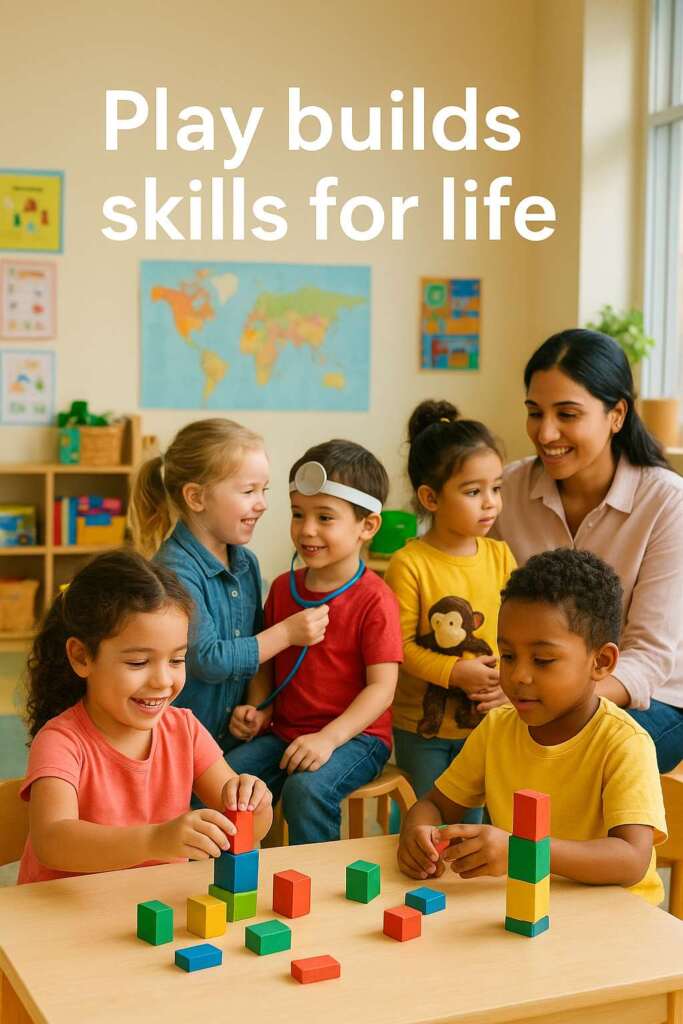
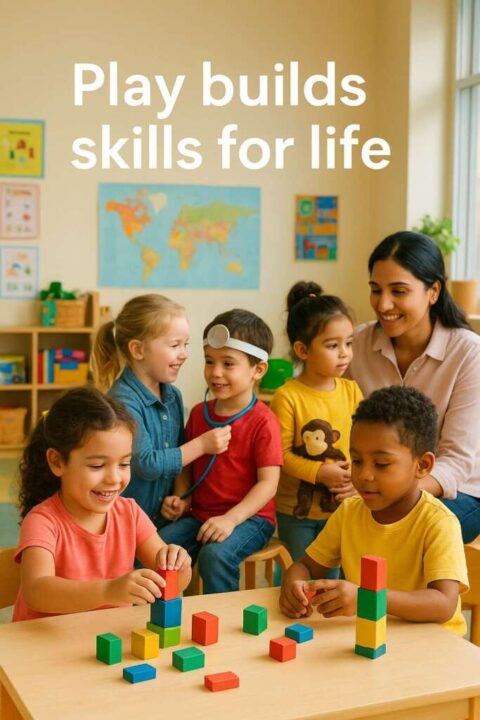
Play-based learning goes far beyond “just playing.” It is a thoughtful, structured approach where teachers use play activities to spark curiosity, develop skills, and build confidence. Whether it’s role-playing as a doctor, building with blocks, storytelling, or outdoor exploration, each play experience is a stepping stone for learning language, math, problem-solving, and social skills.
Why Play-Based Preschool Works Best
1. Stronger Social and Emotional Growth
Through play, preschoolers learn to share, negotiate, and build friendships. They also practice self-regulation—waiting for a turn, managing big feelings, and cooperating with others. These life skills are just as important as academics and help children thrive in school and beyond.
2. Boosts Cognitive and Language Development
When children play pretend, solve puzzles, or sing rhymes, their brains are making connections that strengthen memory, creativity, and critical thinking. Play also builds vocabulary and communication skills naturally, as children talk, imagine, and explain their ideas.
3. Encourages Problem-Solving and Independence
Play is the child’s first laboratory. When a block tower falls, children experiment with new ways to rebuild it. When they role-play as a shopkeeper, they figure out how to count and exchange pretend money. These small moments of discovery build confidence and independence.
4. Supports Physical Development
Running, climbing, painting, and building all help refine both gross and fine motor skills. Play-based preschools encourage active bodies as much as active minds.
5. Creates a Love for Learning
Children are naturally curious. A play-based preschool taps into that curiosity instead of pushing rote memorisation too early. When children associate learning with joy and discovery, they carry that love of learning throughout their schooling years.
Why Parents Should Choose a Play-Based Preschool
In growing cities like Thane, parents are seeking preschools that balance academic preparation with holistic development. A play-based preschool ensures that your child doesn’t just learn ABCs and numbers, but also develops creativity, problem-solving skills, empathy, and resilience. This balanced approach prepares children not only for formal school but also for the real-world challenges of tomorrow.
The Research Behind Play-Based Learning
Studies in early childhood education consistently show that children in play-based programs perform as well or better in literacy and numeracy compared to peers in purely academic preschools—while also showing stronger social skills, better emotional regulation, and higher creativity. Pediatric and education experts emphasise that play reduces stress, nurtures relationships, and supports healthy brain development. In short, research confirms what parents often see every day: when children learn through play, they thrive.
Final Thoughts
Choosing a preschool is choosing the environment where your child’s first love for learning will take root. A play-based preschool is not about delaying academics; it is about laying a deeper, stronger foundation for them. By encouraging curiosity, imagination, and joy, play-based learning gives preschoolers the very best start in life.
If you are looking for a play-based preschool, ensure the school values both structured play and guided exploration—because these are the experiences that shape confident, happy, lifelong learners.